LiftX Group — Heavy Lifting, Rigging, Engineering
Tower crane silhouetted against a dusk sky
What we do

Services

Four disciplines under one contractor, so there's one survey, one plan and one place to go when the programme moves.

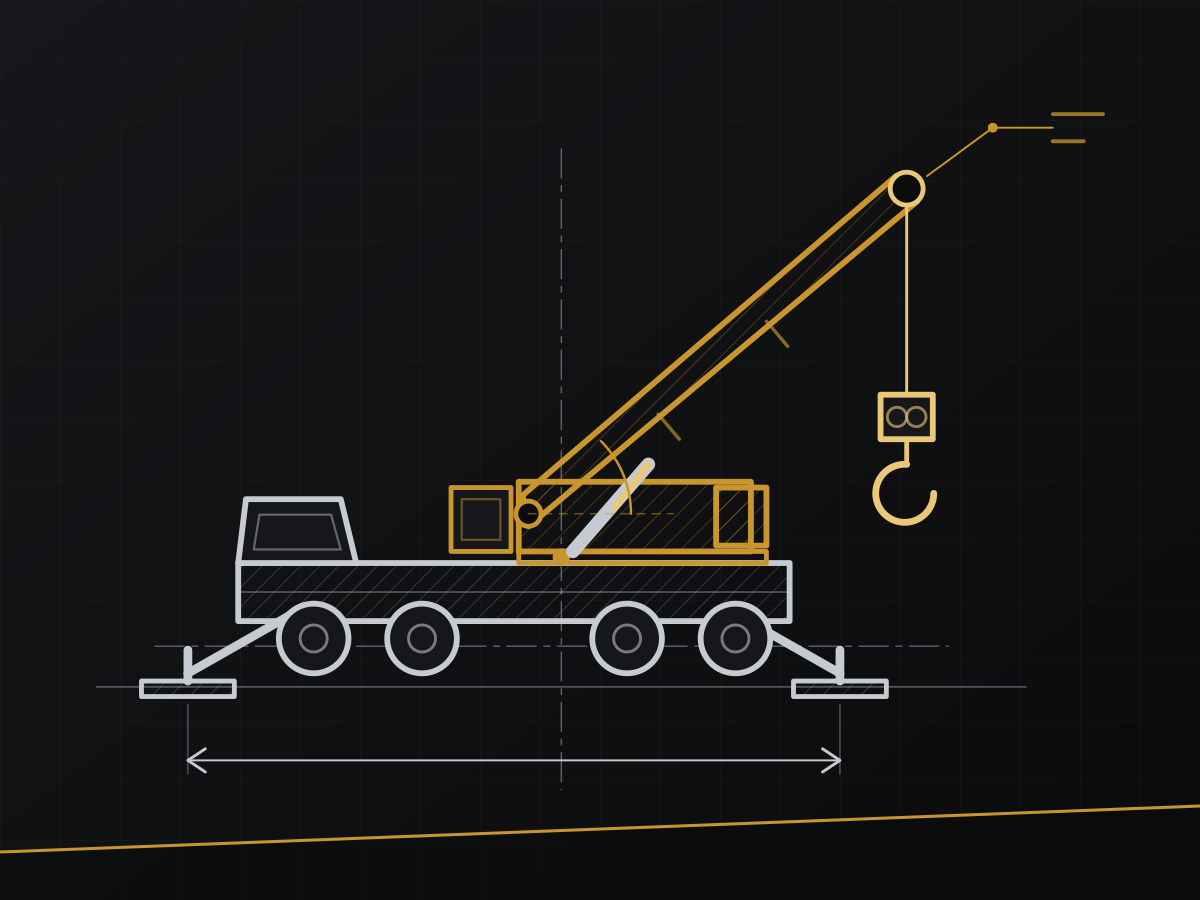
Engineering drawing: mobile crane elevation with outriggers deployed and boom extended
01 — Crane hire

Crane hire

Contract lift or operated hire, with the machine chosen for the radius and the ground rather than for what happens to be free. We survey first, confirm what will actually reach, and price the job you're really doing.

  • Contract lift — we take the planning and the liability
  • Operated hire — crane and operator to your appointed person's plan
  • All-terrain and lorry-mounted machines
  • Ground-bearing pressure assessed, mats and spreaders supplied
  • Escorted site access and out-of-hours slots where the site demands it

The fleet list and capacity range go here — machine types, maximum capacity, and the load chart range you want quoted publicly. We've deliberately left this blank rather than guess: published capacities are a claim a client will hold you to.

Once confirmed, this list is the single most useful thing on the page for a project engineer sizing a lift.

The faster you can answer these, the faster you get a firm price rather than a range.

  • Weight, dimensions and lifting points of the load
  • Site address, access route and any restrictions on approach
  • Radius from a safe set-up position to the landing point
  • Ground conditions — hardstanding, made ground, basements or services below
  • Overhead obstructions, particularly power lines
  • Date, and whether the slot can move
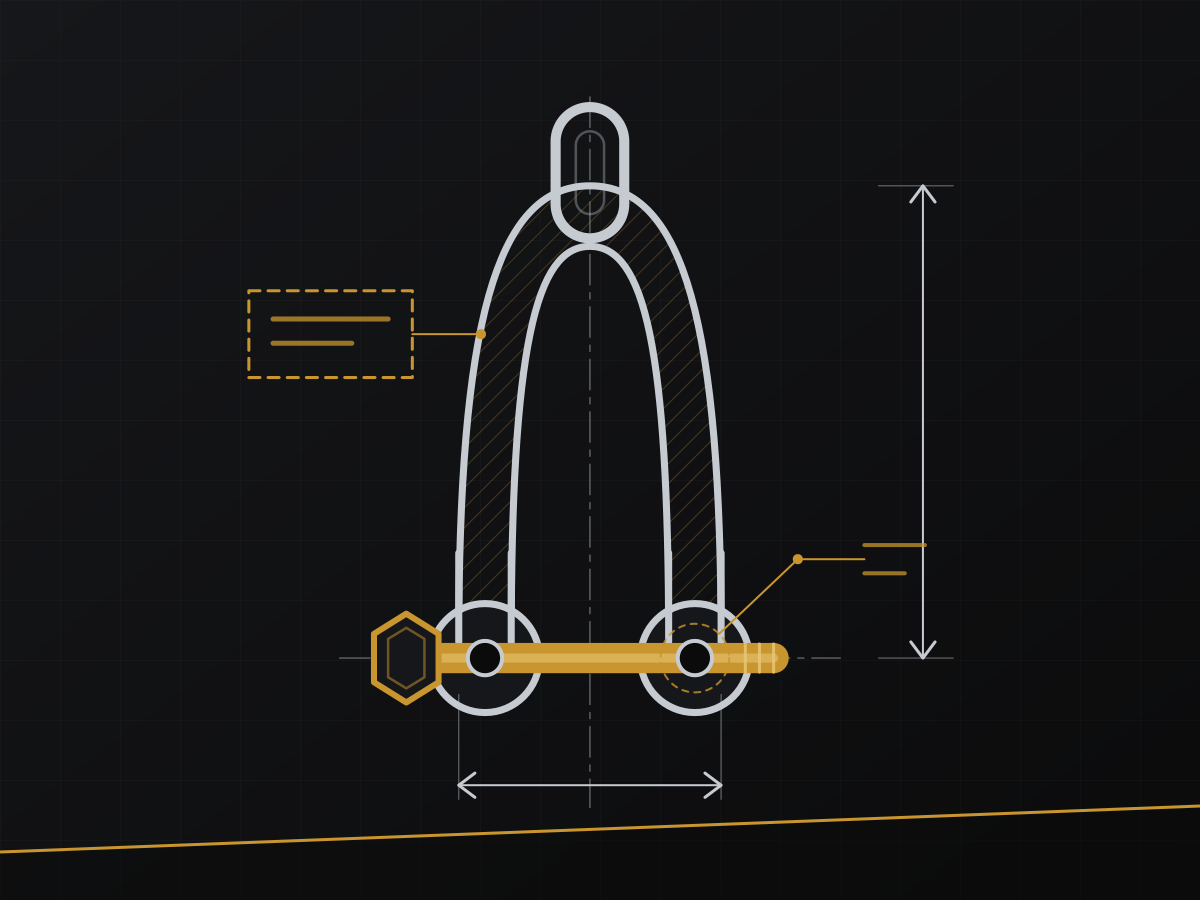
Engineering drawing: bow shackle in orthographic elevation, with dimensions
02 — Rigging services

Rigging services

The gear between the hook and the load is where most lifts are won or lost. We specify it for the actual load, not the nominal one, and everything that goes out is in date and marked.

  • Chain, wire rope, round and webbing slings
  • Shackles, eyebolts, swivels and master links
  • Spreader and lifting beams for long or fragile loads
  • Below-the-hook solutions for awkward centres of gravity
  • Slinger-signaller and banksman provision

Lifting equipment and accessories are inspected and certificated under LOLER 1998 — accessories at least every six months, and after any event that could affect their integrity. Certificates travel with the gear and copies go in the job pack.

Add the accreditations and memberships you actually hold here, with certificate numbers — and nothing you don't. This is the paragraph a procurement team reads twice.

Gear can be supplied outright, hired for the duration, or specified and sourced on your behalf. We'll also inspect and certificate equipment you already own and tell you plainly what should come out of service.

  • Outright supply with test certificates
  • Short and long-term hire
  • Periodic thorough examination of client-owned gear
  • Register maintained so nothing quietly runs out of date
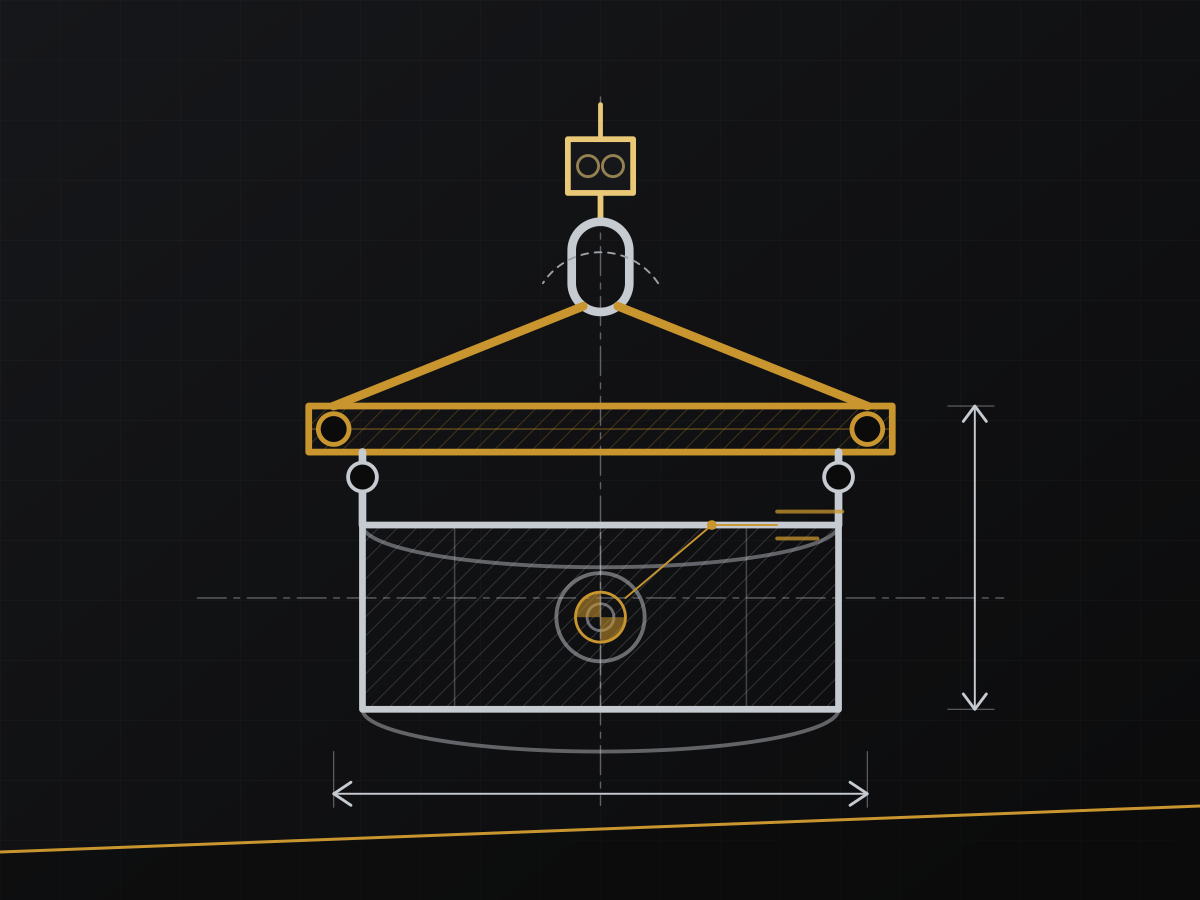
Engineering drawing: load suspended from a spreader beam, with the centre of gravity marked
03 — Heavy lifting

Heavy lifting

Plant installation, structural steel, tanks and vessels — the loads that don't fit a standard method and need someone to work out how they land in the right place, the right way up, first time.

  • Machinery installation, relocation and decommissioning
  • Structural steel and precast placement
  • Tank, vessel and process equipment setting
  • Tandem lifts where a single machine won't reach
  • Confined and live-site work with restricted access

Most heavy lift work falls into one of a few shapes. Recognising which one yours is early usually saves a day on site.

  • Straight lift and set — load in, load down, single position
  • Lift and travel — load moved under load across the site
  • Through-the-roof or through-an-opening placement
  • Multi-crane tandem lift with load sharing calculated in advance
  • Phased installation over several visits against a live programme

  • A set-up area clear and available for the whole window, not just the lift
  • Confirmed ground bearing capacity, and drawings of anything buried
  • Exclusion zone that can genuinely be held — agreed with other trades beforehand
  • A named site contact with the authority to stop and restart work
  • Permits, inductions and access arrangements issued before the day
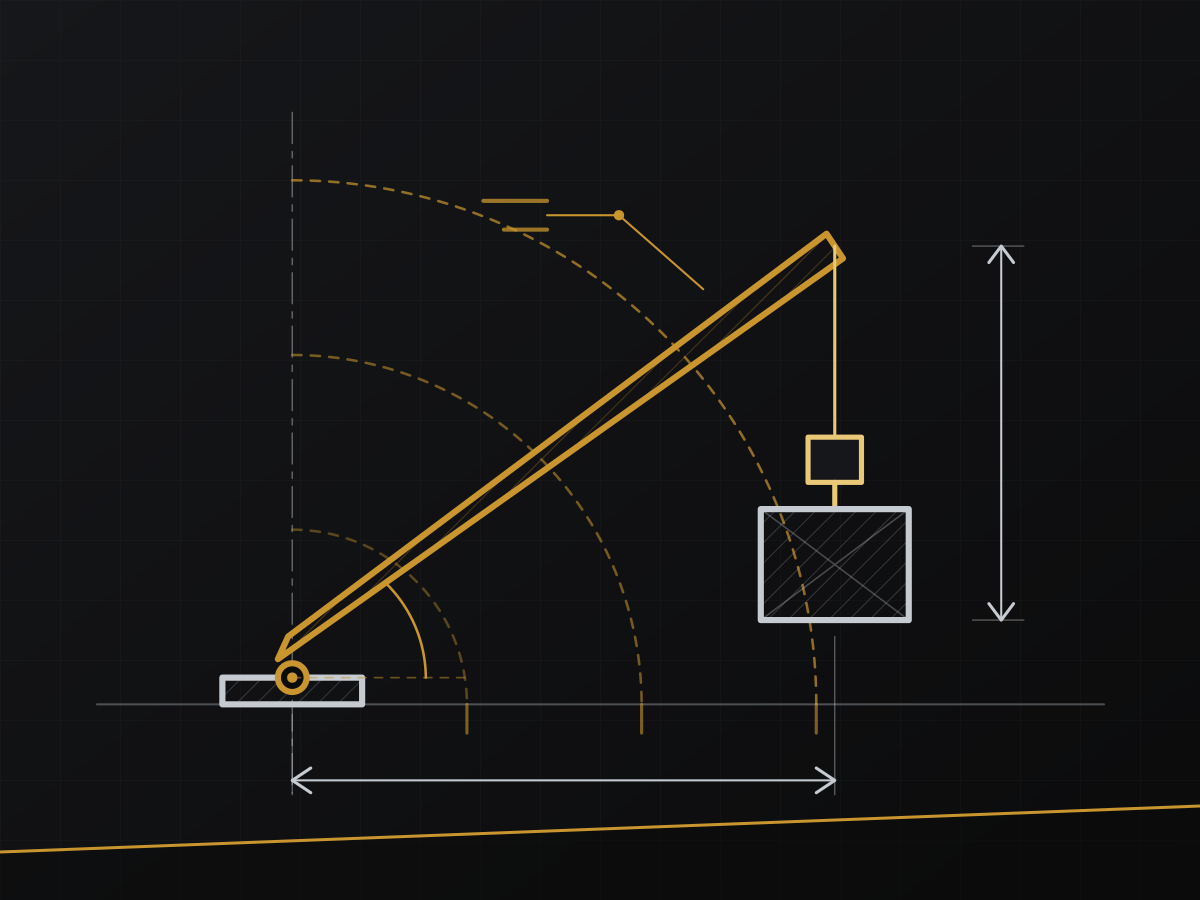
Engineering drawing: lift plan schematic showing radius arcs, boom angle and dimensions
04 — Project planning

Project planning

Lifts go wrong in the planning, not the lifting. An appointed person surveys the site, writes the plan and signs it — and if the plan says the lift doesn't work as scoped, you hear that before the crane is booked, not on the morning.

  • Site survey and access assessment
  • Lift plans prepared and signed by an appointed person
  • Method statements and risk assessments
  • Crane position and load radius drawings
  • Liaison with principal contractors and other trades

Planning follows BS 7121, the code of practice for the safe use of cranes. In practice the plan answers:

  • What is being lifted, what it weighs, and where its centre of gravity sits
  • Which machine, in which configuration, standing where
  • What the ground underneath will take
  • Which accessories are used and how the load is attached
  • Who does what — appointed person, supervisor, operator, slinger
  • What stops the lift, and what happens then

Everything arrives before mobilisation, not on the day, so your own approvals process has time to run.

  • Lift plan, signed and dated
  • Risk assessment and method statement
  • Crane position drawing with radii marked
  • Current test certificates for crane and accessories
  • Operator and slinger competence records
  • Insurance certificate
Talk to us

Tell us the load.
We'll tell you the method.

Weight, site and date is usually enough for us to say yes, no, or what would have to change.